
What an Archaeologist Does in the Field and Lab
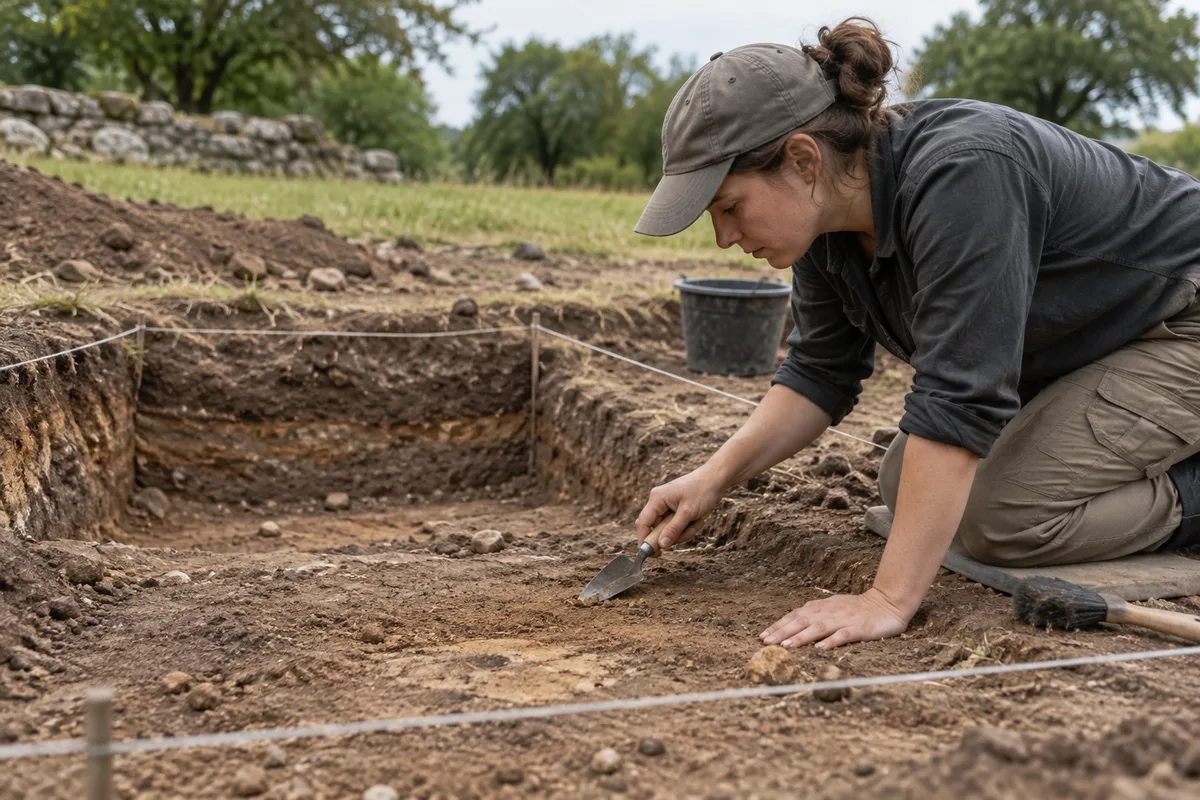
An archaeologist starts with a research question and examines the records, maps, and material evidence relevant to it. O*NET describes site survey, excavation, recording artifact locations and conditions, and comparing findings across sites. Laboratory work can include describing objects, measuring them, and interpreting what they reveal about human activity.
The relationship between an object and its surroundings matters. A project’s notes, photographs, maps, and collection records must remain connected. If you’re considering the field, ask to see how a supervised project records those connections. Careful documentation is a skill to practice alongside excavation and artifact identification.
Sources: O*NET: Anthropologists and Archeologists · BLS: Anthropologists and Archeologists
Archaeologist Education Requirements
A master’s is the usual BLS entry qualification. Bachelor’s graduates with relevant field and laboratory training can qualify for some technician or assistant positions.
Source: BLS: Anthropologists and Archeologists
Degrees to Consider
Archaeologist Salary
The national median annual wage for anthropologists and archeologists was $70,770 in May 2025. The 10th percentile was $49,050 and the 90th percentile was $108,060.
BLS combines archaeologists and anthropologists in one wage category. These figures describe that shared occupational group, not archaeologists alone.
- 10th Percentile
- $49,050
- Median
- $70,770
- 90th Percentile
- $108,060
Source: BLS Occupational Employment and Wage Statistics, May 2025, U.S. estimates for Anthropologists and Archeologists (SOC 19-3091); 8,990 employed. These figures cover workers across experience levels. They describe occupational wages, not starting offers or earnings for everyone with a particular major. How We Read the Data.
Cultural Resource Management Is a Major Employment Setting
The Society for American Archaeology identifies cultural resource management, or CRM, as the setting where most archaeologists work. Firms employ field and laboratory assistants as well as project managers. Archaeologists also work for government and Tribal agencies, museums, historic sites, and universities.
CRM work includes research, coordination, and written reports. Before applying, find out whether a position focuses on field survey, laboratory processing, analysis, or managing projects. Ask how assignments are scheduled and who reviews the finished work. A posting for a temporary field assistant and one for a project archaeologist describe different levels of responsibility.
Sources: Society for American Archaeology: Archaeology as a Career
An Archaeology Degree and Field School Prepare You for Different Tasks
BLS lists a master’s as the usual preparation for this occupation, with some positions requiring a doctorate. Bachelor’s graduates with relevant experience may enter as field or laboratory technicians or research assistants. SAA describes anthropology and archaeology as common undergraduate majors and emphasizes practical field and laboratory training.
A field school gives you supervised practice in archaeological research. Ask which survey, excavation, recording, and laboratory methods it teaches. Check the full cost, credit arrangements, daily schedule, and accessibility before enrolling. Compare that training with the entry jobs you want rather than choosing a field school only for its location.
Geography courses can add GIS and spatial skills to an archaeology course plan. They supplement the archaeological training required for the work; inspect the archaeology curriculum and field experience first.
Sources: BLS: Anthropologists and Archeologists · Society for American Archaeology: Archaeology as a Career
Travel, Physical Work, and Report Deadlines
Archaeological fieldwork can involve extended travel, irregular hours, and work in heat, cold, or remote locations. BLS also describes walking or hiking while carrying equipment. Other assignments take place in laboratories, museums, and offices. Ask about the specific tasks and conditions, including the balance of fieldwork and indoor work.
SAA notes that some CRM field and laboratory assistant roles are temporary. Before accepting an assignment, confirm its expected duration, travel arrangements, lodging, pay terms, and supervision. For an internship, also ask whether you’ll see the project through analysis and reporting. That experience helps you understand how the field records support a conclusion.
Sources: BLS: Anthropologists and Archeologists · Society for American Archaeology: Archaeology as a Career
How to Become an Archaeologist
Choose a Program With Archaeology Faculty
Compare anthropology and archaeology programs by their archaeological methods courses, laboratory access, and supervised research opportunities. Ask how field training fits into the degree.
Complete Relevant Field Training
Select a supervised field school that teaches methods relevant to the work you want. Keep a clear record of the techniques and responsibilities you practiced.
Build Laboratory and Writing Experience
Seek an assistant role or supervised project that includes collection records, analysis, or reports. Ask permission before using any project material in an application.
Match Further Study to Responsibility
Compare technician openings with the graduate preparation and experience required for project roles. Use that distinction when deciding when and where to pursue a master’s.
Questions About This Career
Do I Need a Master’s Degree to Work in Archaeology?
A master’s is the usual qualification in the BLS occupation profile. Some field and laboratory assistant or technician jobs accept a bachelor’s with relevant training and experience. Requirements depend on the responsibility of the position.
Is Archaeology Mostly Excavation?
No. Archaeologists also survey sites, examine records, analyze materials, maintain documentation, and write reports. The balance depends on the project and role.
Why Is the Salary the Same as the Anthropologist Figure?
Both pages use the same BLS occupational wage category, which combines anthropologists and archaeologists. The figures should not be interpreted as separate salary estimates for the two jobs.
Sources
Preparation advice connects these requirements to coursework and projects you can evaluate.
- BLS: Anthropologists and Archeologists: Education, technician entry routes, field training, working conditions, and combined wage scope.
- O*NET: Anthropologists and Archeologists: Site survey, artifact records, location documentation, laboratory work, and research reports.
- Society for American Archaeology: Archaeology as a Career: Cultural resource management, employment settings, field school, and bachelor-level field and laboratory assistant roles.