
The Branches of Anthropology
Cultural anthropology examines ways of life and meaning; archaeology works with material evidence from the past; biological anthropology studies human variation and evolution. Programs often begin with several branches before letting you concentrate. Read the course map for the branch you want, because breadth in year one does not guarantee depth later.
Fieldwork Is a Method, Not a Vacation
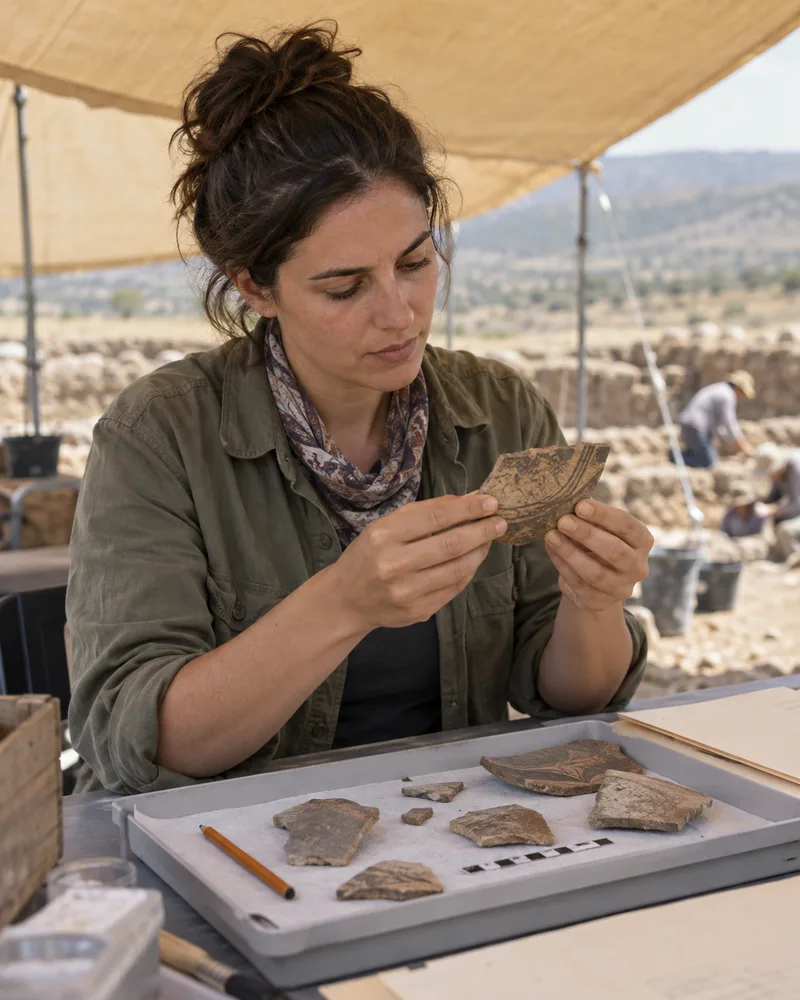
Interviews, observation, records, collections, and material analysis all require documentation and interpretation. If archaeology or applied research attracts you, look for named field courses, lab work, or a supervised project in the catalog.
Plan for the Credential Beyond the Major
BLS lists at least a master’s degree as typical for anthropologists and archeologists. Some bachelor’s graduates start as field or laboratory technicians or research assistants when they have relevant experience. The American Anthropological Association also describes work in government, museums, cultural resource management, and other organizations.
Field and Lab Support
Bachelor’s graduates with relevant experience may pursue technician or assistant work.
Applied Research
Interviewing and cultural analysis can matter in organizations studying how people use services or places.
Graduate Anthropology
Advanced research and many named anthropologist or archeologist positions usually require graduate study.
Explore Related Careers
Read about the work, pay, and entry requirements for each occupation.
Where Anthropology Degrees Put Their Emphasis
These official course maps show how departments introduce the branches and make room for later concentration. If you hope to do fieldwork, check the actual requirement and the kind of work offered before you apply.
Anthropology BA
The curriculum introduces cultural, linguistic, biological, and archaeological anthropology.
Compare University of Arizona’s Anthropology BAAnthropology BA/BS
The degree requires introductory cultural and biological anthropology and archaeology before upper-division breadth and concentration work.
Compare University of Oregon’s Anthropology BA/BSFederal program data include 756 records in the Anthropology, General category (CIP 45.0201), including 408 bachelor’s records. These are institution, field, and award-level records; related specializations may have separate categories. See how we count programs.
Browse the Curriculum LibraryQuestions About Anthropology Degrees
What Are the Main Types of Anthropology?
Programs commonly introduce cultural anthropology, archaeology, biological anthropology, and linguistic anthropology, though their course depth and naming vary.
Can You Work in Archaeology With an Anthropology Degree?
Some bachelor’s graduates gain field or lab technician work with relevant experience. BLS lists at least a master’s degree as typical for anthropologist and archeologist roles.
Is Anthropology a Social Science?
Yes. It studies people and cultures using systematic evidence, although some branches overlap with natural science and humanities methods.
Sources and Further Reading
- NCES Classification of Instructional Programs for CIP boundaries.
- Our Program Data and Editorial Methodology for count and metric definitions.
- BLS Anthropologists and Archeologists Career Profile.
- American Anthropological Association Careers.
- University of Arizona Anthropology BA: Program Details and Sources.
- University of Oregon Anthropology BA/BS: Program Details and Sources.