
From a Site Proposal to a Public Decision
A developer may want to build on a parcel. A city may need a transportation plan. Residents may ask for safer access to a park. Planners collect the facts that make these proposals discussable: land-use rules, population trends, environmental conditions, infrastructure, and the effects on nearby areas. BLS describes planners reviewing plans and proposals, meeting with officials, developers, and the public, and advising on what should be approved or changed.
Much of the value lies between a map and a decision. A parcel may look suitable until a site visit reveals a drainage issue or an access problem; a proposal may satisfy one rule yet conflict with a broader community plan. O*NET describes planners creating maps and reports, advising on feasibility and compliance, inspecting sites, and making recommendations. The planner’s work informs a decision; elected bodies or other authorized officials usually make it.
Sources: BLS Occupational Outlook Handbook: Urban and Regional Planners · O*NET OnLine: Urban and Regional Planners
Urban Planner Education Requirements
BLS lists a master’s degree as typical, but some planners enter with a bachelor’s degree from an accredited planning program. Most states do not license planners; New Jersey is an exception. AICP certification is separate from an entry degree.
Source: BLS Occupational Outlook Handbook: Urban and Regional Planners
Degrees to Consider
Urban Planner Salary
The national median annual wage for urban and regional planners was $89,320 in May 2025. The 10th percentile was $60,010 and the 90th percentile was $134,490.
BLS reports this wage for Urban and Regional Planners, the occupation that includes urban planners.
- 10th Percentile
- $60,010
- Median
- $89,320
- 90th Percentile
- $134,490
Source: BLS Occupational Employment and Wage Statistics, May 2025, U.S. estimates for Urban and Regional Planners (SOC 19-3051); 44,230 employed. These figures cover workers across experience levels. They describe occupational wages, not starting offers or earnings for everyone with a particular major. How We Read the Data.
At the Desk, on Site, and at Public Meetings
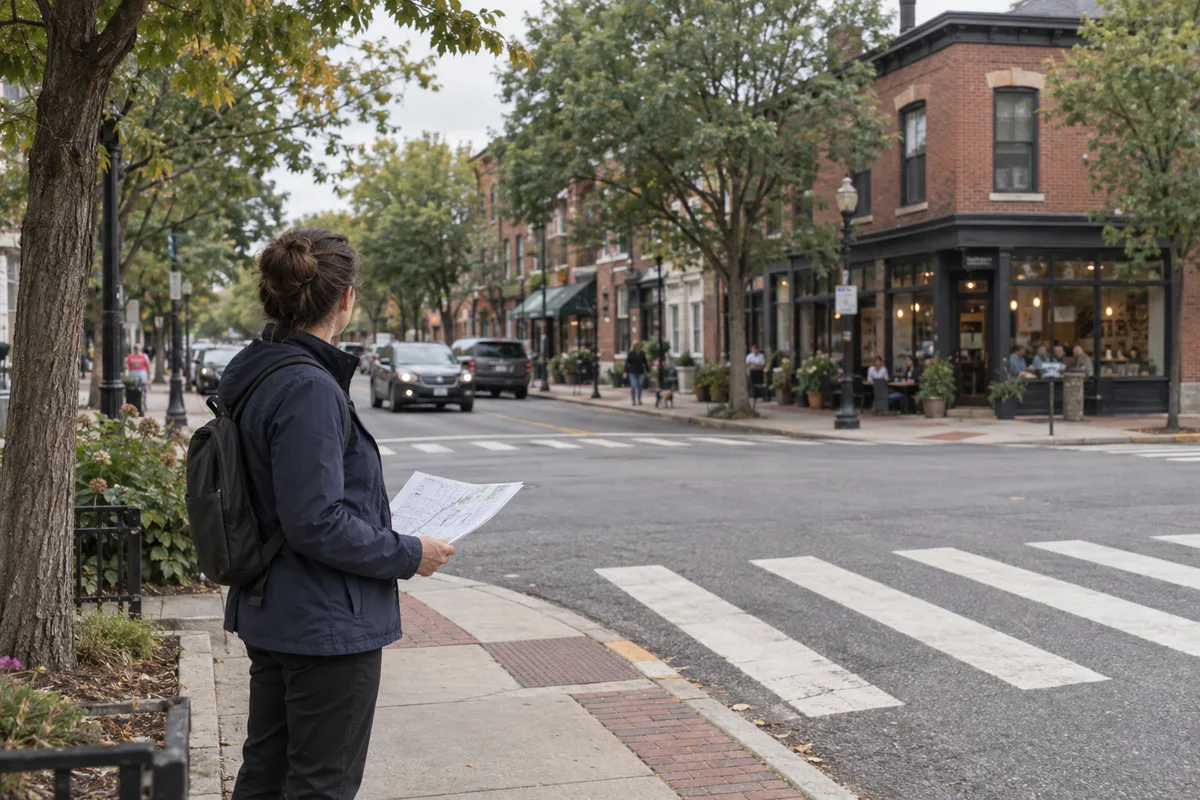
Planners often work in local government, with some in consulting and other settings. One day may involve GIS layers, a staff report, and a zoning code. Another may involve a site visit or a meeting where people disagree sharply about traffic, housing, or the character of a neighborhood. BLS says planners usually work in offices but travel to development sites and community meetings, with some evening and weekend meetings.
You need to listen without promising an outcome, explain technical limits in ordinary language, and document how a recommendation fits the rules and available evidence. A planner who enjoys maps but dislikes public discussion may find the role different from a purely technical GIS job.
Sources: BLS Occupational Outlook Handbook: Urban and Regional Planners · O*NET OnLine: Urban and Regional Planners
Choose a Program for the Work You Want
BLS identifies a master’s degree as the typical entry credential for urban and regional planners. It also describes a route into some positions through a bachelor’s degree from an accredited planning program. If you are comparing programs, check the Planning Accreditation Board’s current directory rather than assuming accreditation from the word planning in a degree title. Useful coursework spans planning law, land use, statistics, GIS, and the social and environmental effects of development.
A student project can become useful evidence if it reads like a real planning task: state the proposal, show the maps and governing constraints, compare alternatives, explain public tradeoffs, and write a recommendation someone else can question. An internship with a planning department or consulting firm can show how staff reports and hearings actually work. It helps you test a specialty, from housing to transportation.
Sources: BLS Occupational Outlook Handbook: Urban and Regional Planners · Planning Accreditation Board: Accredited Programs
Planner, Cartographer, or Certified Planner?
GIS and maps are common planning tools, but a planner’s job goes beyond producing geographic information. Planners interpret land-use rules, weigh proposals against community goals, and explain recommendations in public. A cartographer or GIS specialist may focus more of the day on acquiring, managing, and presenting geographic data. If you like both, read job descriptions for the balance of spatial analysis, policy writing, and public meetings.
Certification is a later professional choice rather than a universal entry requirement. BLS says most states do not license planners, although New Jersey does. The American Institute of Certified Planners has separate education, experience, and examination conditions. Some employers may prefer or require the credential for particular positions, so check the vacancy and state rules before paying for a program or assuming certification is mandatory on day one.
Sources: BLS Occupational Outlook Handbook: Urban and Regional Planners · O*NET OnLine: Urban and Regional Planners · American Planning Association: Get Started With AICP Certification
How to Become an Urban Planner
Study the Rules and the Place
Learn land-use law, community planning, GIS, and how population and environmental data inform a proposal. Read a local comprehensive plan and a real planning commission staff report.
Verify the Degree Route
Compare the BLS master’s-degree norm with accredited bachelor’s options. Use the Planning Accreditation Board directory to check a specific program’s current status.
Practice a Public Recommendation
Build a project with a map, alternatives, relevant rules, a clear recommendation, and a short explanation for residents who have not studied planning.
Get into the Process
Seek a planning internship, attend a public hearing, and apply to roles whose mix of site review, GIS, policy, and community contact fits your interests. Check state licensing and employer certification language individually.
Questions About This Career
Do Urban Planners Need a Master’s Degree?
A master’s degree is the typical entry credential according to BLS, but some positions accept a bachelor’s degree from an accredited planning program. The right route depends on the employer and the work.
Do Urban Planners Need a License or AICP Certification?
Most states do not license planners; New Jersey is an exception noted by BLS. AICP is a separate professional certification with education, experience, and examination requirements, and it is not required for every entry job.
Is Urban Planning Mostly GIS?
No. Maps and GIS help planners evaluate places, but the role also includes interpreting rules, reviewing proposals, visiting sites, meeting the public, and explaining recommendations to decision-makers.
Sources
Preparation advice connects these requirements to coursework and projects you can evaluate.
- BLS Occupational Outlook Handbook: Urban and Regional Planners: Duties, public meetings, field visits, typical degree, bachelor’s pathway, and licensing exception.
- O*NET OnLine: Urban and Regional Planners: Land-use review, maps, public contact, site inspection, and advisory tasks.
- Planning Accreditation Board: Accredited Programs: Current directory to verify planning-program accreditation.
- American Planning Association: Get Started With AICP Certification: Certification has separate education, experience, and examination requirements.