Lowest In-State Tuition for a Bachelor’s
University of the District of Columbia
$5,662 in annual undergraduate tuition and required fees for state residents (2024–25), the lowest among the 6 bachelor’s programs shown here.
Program Rankings
Ranked lists for every field and degree level, scored within that field and level.
All Program RankingsDegrees for Working Adults
Most Affordable Degrees
Online Degrees
Careers
What the work involves, what it pays, and the education each job usually asks for.
All Career GuidesBachelor’s Entry Routes
Graduate Study Routes
Compare Majors
Courses, research methods, and career routes, side by side before you choose a major.
Compare All MajorsHead-to-Head Comparisons
Explore a Field
Browse by State
State lists by subject and degree level, ordered by the national comparison score.
Browse All StatesPrograms by State
Compare 10 political science programs in Washington, DC, grouped by degree level. Georgetown University leads the bachelor’s list. Each section starts with its highest-scoring eligible programs, so you can focus on the degree you plan to earn.

By Taylor Rupe, Editor
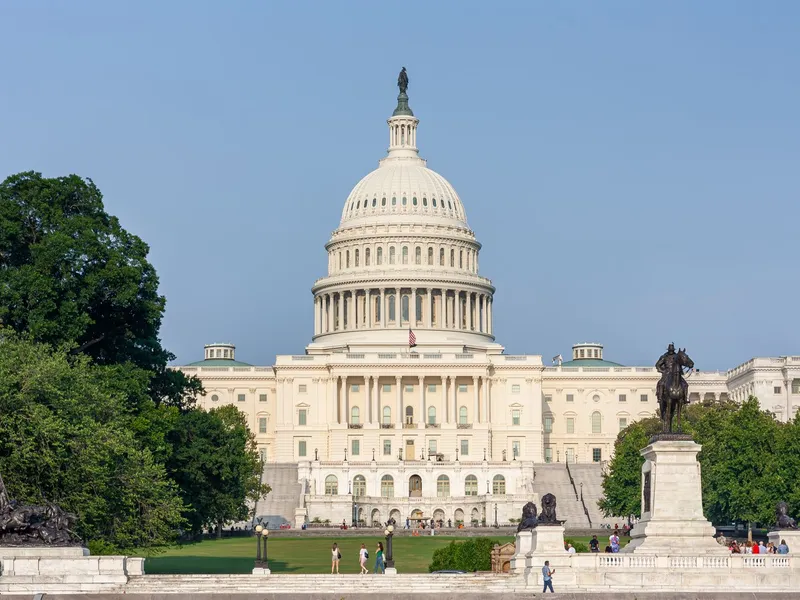
6 schools in Washington, DC awarded political science bachelor’s degrees in 2023–24, scored against 991 bachelor’s programs nationwide. This section shows the top 6 of 8 eligible programs at this level.
Major in Government
Georgetown’s government major takes ten courses: four foundational courses in U.S. political systems, comparative political systems, international relations and political theory, then six electives that must include a second upper-division political theory course and a Department Seminar. The seminar is capped at fifteen students and ends in a research paper of generally 25 pages or more. The department strongly encourages Analysis of Political Data among your electives. If you apply in the fall of junior year with a GPA of 3.5 or better, the Honors Program lets you write a senior thesis, which also satisfies the seminar requirement. Georgetown awarded 178 degrees in 2023–24.
Program Sources: Major in GovernmentMajor in Government
Bachelor of Arts with a Major in Political Science
George Washington’s political science BA asks for six 2000-level courses, 18 credits, drawn from groups in comparative politics, American government and politics, international politics, law and organizations, research methods, and political thought, with at least one course from the research methods group and one from political thought. Introductory courses in comparative, American and international politics come first, and a proseminar in the junior or senior year plus an advanced topics course finish the major. The bulletin points to internships on the Hill, on campaigns and at government agencies as a way to extend classwork. GW awarded 231 degrees in 2023–24.
Program Sources: Bachelor of Arts with a Major in Political Science | The George Washington UniversityBachelor of Arts with a Major in Political Science | The George Washington University
BA in Political Science
You choose one of six concentrations here: American Government, Comparative Politics, Gender, Race & Politics, Law & Politics, Policy or Political Theory. Introduction to Political Research comes early and covers research design and quantitative methods, and advanced courses give you chances to work with faculty and present at campus symposia or national conferences. Internships can supply up to 12 credits, in a city where sample placements include the Brookings Institution and the White House. With 189 degrees awarded in 2023–24, this is one of the larger options on its state page.
Program Sources: BA in Political Science | School of Public Affairs | American University
Political Science (B.A.)
Howard’s political science department grew from the work of Ralph Bunche, a founder of the department and the first Black person to receive a doctorate in political science. Majors shape their own path through five informal concentration options: international relations, comparative politics, political theory, Black politics and American government. Coursework covers national, state and local government, the political challenges and opportunities facing the African American community, and comparative political systems. The department points students toward graduate school, law school and other professional programs. A cohort of 194 degrees in 2023–24 makes this one of the larger options on its state page.
Program Sources: Undergraduate Studies | Howard University Department of Political ScienceUndergraduate Studies | Howard University Department of Political Science
B.A. in Politics
Every politics major here sorts coursework into one of three concentrations: American government, world politics or political theory. Three introductory courses come first, usually in the first three semesters. After that you take at least nine politics electives, four in one concentration and at least three outside it. World politics adds Introduction to International Relations. The degree closes with a two-part comprehensive exam in the fall of senior year, one multiple-choice section and one essay section. Side options include a pre-law track, an honors thesis and double majors. With 29 degrees awarded in 2023–24, the graduating cohort is small.
Program Sources: B.A. in Politics - The Catholic University of America | CUA
Bachelor of Arts in Political Science
The major takes 33 credits inside a 120-credit degree, and its research spine is three courses: Political Research Skills, Methods of Political Science and Senior Seminar. A 15-credit global studies concentration is optional. Located in Washington, the program lists the Congressional Internship Program and a Model International Organizations Simulation as hands-on options, and past students have interned on Capitol Hill and worked on national and local campaigns. Classes average 15 students, and a Pi Sigma Alpha chapter is on campus. The 20 degrees awarded in 2023–24 make this a small cohort.
Program Sources: Bachelor of Arts in Political Science | UDC | University of the District of ColumbiaBachelor of Arts in Political Science | UDC | University of the District of Columbia
4 schools in Washington, DC awarded research doctorates in political science in 2023–24. Doctoral scores leave out tuition because funding offers, not sticker price, decide the real cost. This section shows the top 4 of 4 eligible programs at this level.
Georgetown's Ph.D. in Government is organized around one major field and one minor field, usually drawn from the four subfields of political science. You'll take five courses in theory and methods unless political theory is your major, and faculty appraise your progress at the end of the second semester. Students in comparative politics, international relations and political theory must also show research competence in a second language. After coursework come written comprehensive exams, sometimes with an oral exam in the major field, then a thesis proposal and a dissertation that closes with a defense before your committee. Along the way, many students serve as teaching assistants in larger undergraduate courses, and some teach their own seminars.
Program Sources: Ph.D. Degree Requirements | Department of GovernmentPh.D. in Government | Department of Government
PhD in Political Science
George Washington’s PhD has three major fields: American politics, comparative politics, and international relations. Minor options widen the scope to public policy, political theory, and research methodology. Required courses include the Craft of Political Inquiry and a dissertation development workshop. Before candidacy, students complete examinations in their primary and supporting fields, an original research paper, and a publicly defended dissertation prospectus, making research design and writing explicit parts of the progression.
Program Sources: PhD in Political Science
Ph.D. in Politics
Doctoral work here is organized around three concentrations: political theory, world politics and American government. Seminars generally run under ten students, and you carry both a major and a minor field plus a required course sequence in political theory. Coursework and comprehensive exams are built to finish in three years of full-time study, with classes mostly in the evenings so you can attend part-time while working. Then comes the dissertation, which sets the real clock: the median time to degree is under seven years, counting any master’s earned in the department. Three degrees were awarded in 2023–24.
Program Sources: Ph.D. in Politics - Catholic University of America | CUA
PhD in Political Science
Doctoral students organize their training around three fields, picking American politics, comparative politics or political methodology for the primary and secondary fields. The 36 credits break into 12 in the primary field, 12 in research design and methodology, 6 in the secondary field and 6 electives. Candidacy requires a written comprehensive exam in your major field, a qualifier paper and a defended dissertation proposal, and the department expects four to five years to finish. Research workshops and affiliated centers, including the Women & Politics Institute and the Center for Data Science, add professional contacts. Two degrees were awarded in 2023–24.
Program Sources: PhD in Political Science | School of Public Affairs | American University
Each program gets the same comparison score it earns in our national political science model, calculated against the nationwide group that meets the numeric and directory criteria. We then order Washington, DC’s eligible programs by that score within each degree level. This page features up to 10 programs, taking the next highest-ranked program from each degree-level list in turn. Scores are compared only within the same degree level. Bachelor’s lists weigh graduation rate (20%), published tuition (20%), graduate earnings (20%), program reputation (25%), and degrees awarded (15%). Doctoral lists weigh research activity (35%), program reputation (35%), and doctoral degrees awarded (30%). Read how state lists are built.
These picks compare only the programs featured in the lists above.
University of the District of Columbia
$5,662 in annual undergraduate tuition and required fees for state residents (2024–25), the lowest among the 6 bachelor’s programs shown here.
231 political science bachelor’s degrees awarded in 2023–24, the most of any school on this list.
95% of first-time, full-time students at the school finished a bachelor’s within six years. This is a schoolwide rate, not a political science-only rate.
University of the District of Columbia
The highest-scoring public school on the bachelor’s list (No. 6 overall), with a comparison score of 56.7.
Carries the Carnegie 2025 Research 1 designation for very high research spending and doctorate production.
9 research doctorates awarded in 2023–24; ranked first of 4 doctoral programs shown here.
This statewide overview includes all 12 eligible programs at 8 schools. Its totals, tuition comparisons, and ranks describe that wider group; the lists above feature 10 programs.
Eight schools in Washington award political science degrees, and the University of the District of Columbia is the only public one. It ranks sixth for the bachelor’s at $5,662 in 2024–25 schoolwide tuition and fees for District residents, compared with $19,654 to $68,089 at the seven private schools.
Four bachelor’s programs here are large. George Washington University awarded 231 political science bachelor’s degrees in 2023–24, followed by Howard University (194), American University (189), and Georgetown University (178). The University of the District of Columbia awarded 20 degrees and charges $12,514 even for nonresidents, but its schoolwide graduation rate is 44%, against 95% at Georgetown.
On the doctoral list, Georgetown University ranks first with a score of 89.3 and places 16th in the national comparison, with George Washington’s PhD in Political Science second at 82.1.
These are BLS median annual wages for Washington, DC and the United States from the May 2025 Occupational Employment and Wage Statistics survey. A median is the midpoint among workers in the occupation, from new hires to senior staff, so it is not a starting salary for a new graduate. The 10th–90th percentile range shows what the middle 80% of workers earn in the state.
| Occupation | Washington, DC Median | Washington, DC 10th–90th Percentile | U.S. Median | Washington, DC Jobs |
|---|---|---|---|---|
| Political Scientists | $152,530 | $114,920–$195,190 | $142,080 | 3,070 |
| Social Science Research Assistants | $65,330 | $50,810–$112,030 | $61,990 | 1,560 |
| Survey Researchers | $102,390 | $79,040–$217,080 | $69,460 | 150 |
| Urban and Regional Planners | $137,000 | $98,410–$170,980 | $89,320 | 120 |
Source: BLS Occupational Employment and Wage Statistics, May 2025. Wage data does not enter the program scores.
6 schools in Washington, DC appear in the lists shown here (6 bachelor’s, 4 research doctorate programs). A school can appear at more than one degree level. The page features 10 programs selected from 12 eligible programs at 8 schools. The degree counts come from federal IPEDS completions for 2023–24.
University of the District of Columbia lists $5,662 in annual undergraduate tuition and required fees for state residents in 2024–25, the lowest among the bachelor’s programs shown here. That is a schoolwide figure before aid, so check the program’s own costs and any fees for fieldwork or labs.
The federal IPEDS completions file records political science research doctorates awarded in 2023–24 at Georgetown University (9 degrees), George Washington University (11 degrees), American University (2 degrees), The Catholic University of America (3 degrees). These are historical award counts. Check current admissions, advisor availability, and funding directly with each department.
This statewide comparison covers all 12 eligible programs, including those outside the featured lists. Georgetown University ranks first among 4 political science research doctorate programs on the District of Columbia list. It reported 9 research doctorates in 2023–24. George Washington University, The Catholic University of America, and American University also appear on the list. Read the doctoral program’s research areas and advisor information before you apply. Degree awards describe past graduates, not the size of the next entering cohort.
This statewide comparison covers all 12 eligible programs, including those outside the featured lists. University of the District of Columbia in Washington has the lowest resident tuition and required fees among the ranked political science bachelor’s programs: $5,662 for 2024–25. The nonresident figure is $12,514. Those are schoolwide undergraduate charges. Compare your aid offer and housing costs before deciding which school fits your budget.