Lowest In-State Tuition for a Bachelor’s
Minnesota State University, Mankato
$9,572 in annual undergraduate tuition and required fees for state residents (2024–25), the lowest among the 9 bachelor’s programs shown here.
Program Rankings
Ranked lists for every field and degree level, scored within that field and level.
All Program RankingsDegrees for Working Adults
Most Affordable Degrees
Online Degrees
Careers
What the work involves, what it pays, and the education each job usually asks for.
All Career GuidesBachelor’s Entry Routes
Graduate Study Routes
Compare Majors
Courses, research methods, and career routes, side by side before you choose a major.
Compare All MajorsHead-to-Head Comparisons
Explore a Field
Browse by State
State lists by subject and degree level, ordered by the national comparison score.
Browse All StatesPrograms by State
Compare 10 political science programs in Minnesota, grouped by degree level. University of Minnesota-Twin Cities leads the bachelor’s list. Each section starts with its highest-scoring eligible programs, so you can focus on the degree you plan to earn.

By Taylor Rupe, Editor
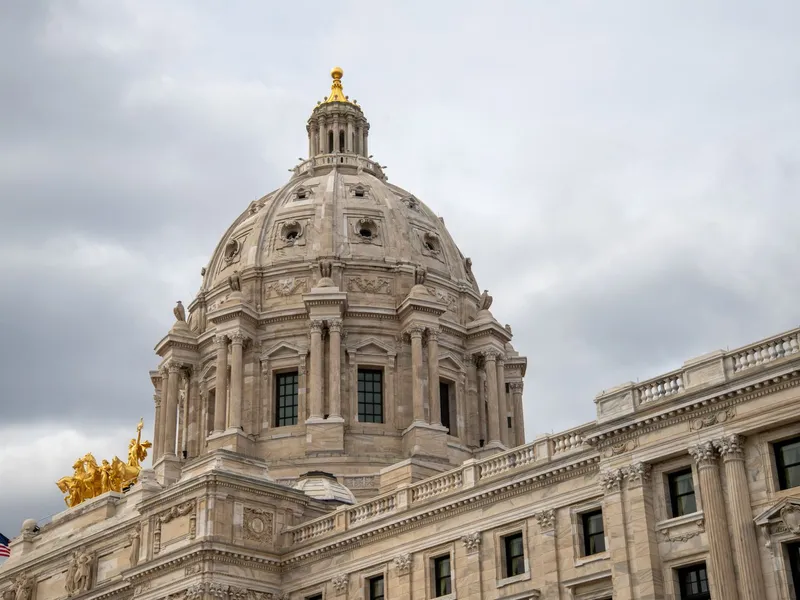
9 schools in Minnesota awarded political science bachelor’s degrees in 2023–24, scored against 991 bachelor’s programs nationwide. This section shows the top 9 of 21 eligible programs at this level.
BA in Political Science
Minnesota’s BA takes 36 political science credits, 27 of them upper-division, and those must include at least one course from three of the four focus areas: political theory, American politics, comparative politics and international relations. No more than 9 lower-division credits count, and every course needs a C- or better. All majors complete the POL 4991 capstone. The BA also carries a second language requirement, and the department tells prospective transfer students to start it before they arrive. Students in the University Honors Program can declare the political science BA at the honors level. That was 148 degrees in 2023–24.
Program Sources: BA in Political Science | Political Science | College of Liberal Arts
Political Science B.A.
Duluth organizes its political science B.A. around four subfields: American government, comparative politics, international relations and public law. The department houses the pre-law program and the Mock Trial Team, which competes in American Mock Trial Association tournaments and works with an instructor who is a practicing attorney. The student Political Science Association hosts forums with local and state candidates. In class you generate original data with survey instruments, present results in poster sessions and write policy memos and briefs. Former diplomats visit courses for students interested in State Department or federal government work.
Program Sources: Political Science B.A. | University of Minnesota Duluth
Political Science Major
Macalester’s major needs at least nine courses, and the department strongly recommends going beyond the introductory level in at least two of four subfields: American politics, comparative politics, international relations and political theory. Foundations courses include Fundamentals of US Politics, Introduction to International Politics and Introduction to Political Theory. You also take a research methods course, which the department urges you to finish before junior year. The Chuck Green Civic Engagement Fellowship selects 12 students a year to co-create a spring seminar and complete a full-time summer project with a local community organization.
Program Sources: Majors and Minors - Political Science - Macalester CollegePolitical Science - Macalester College
Political Science
St. Olaf requires nine political science courses, with no more than three at level I, PSCI 220 Analyzing Politics and Policies as the research methods course, and at least two level III seminars. You also take one course in each of four subfields: American politics and public policy, comparative politics, international relations and political theory. Level III seminars require PSCI 220 plus a course in the relevant subfield and do not count toward subfield distribution. One of the nine can be a statistics and data science course or an extra semester of a world language, which the catalog suggests for anyone considering graduate study.
Program Sources: Political Science < St. Olaf College
Political Science
Gustavus lets you choose a major, a major with honors or a minor, and the catalog groups the curriculum around political theory, comparison of governments and political organizations, political behavior and institutions, and international relations. You can customize your courses toward law, international relations or local government, and pair the major with Environmental Studies; African/African Diaspora Studies; Peace, Justice, and Conflict Studies; or Gender, Women, and Sexuality Studies. Sample courses include Women and Gender in US Politics and Politics of Japan and China. Internships can be local, national or international, and study away includes the Washington Internship Institute. Gustavus conferred 25 degrees in 2023–24.
Program Sources: Political Science | Gustavus Adolphus CollegeAC2.POLI1 Program | Gustavus Adolphus College Catalog
Political Science BA
Minnesota State Mankato offers political science as both a B.S. and a B.A. The B.A. track is recommended if you plan a career in law, jobs related to international affairs or future graduate education, while the B.S. examines politics in the United States and other regions for careers in the public and private sectors. The discipline is divided into American politics, comparative politics, international relations, political theory, public policy and public administration, and you can choose among three areas of concentration that draw on all of them. A pre-law pre-major runs alongside another academic major, and the department hosts the annual Kessel Lecture Series.
Program Sources: Programs | Minnesota State University, Mankato
Bachelor of Arts in Political Science
At St. Thomas you complete required courses in government, public policy, world politics, research methods and political theory, then choose the rest around your own interests, such as American or judicial politics. The department recommends planning your path with a faculty member. Students compete in Mock Trial tournaments, attend Model UN conferences and present research at regional and national conferences. Each academic year, two majors intern with the Citizens League, and others have worked with the Minnesota State Senate, law and judicial offices and political campaigns. Juniors can compete for the G.W.C. Ross Scholarship for their senior year.
Program Sources: Bachelor of Arts in Political Science | University of St. Thomas - MinnesotaPolitical Science | College of Arts and Sciences | University of St. Thomas
Political Science (POLA) - BA Major
Winona State asks political science majors to pair the degree with a minor or a second major, and the work is built around the discipline’s four subfields. After Introduction to American Politics and Introduction to Political Analysis, you take at least one course in American politics, comparative politics, international relations and political theory. At least five courses must sit at the 300 or 400 level. The American politics list leans toward either public service or public law, which suits plans for law school or local government. You finish with a Political Research Seminar and three required internship credits.
Program Sources: Program: Political Science (POLA) - BA Major - Winona State UniversityProgram: Political Science (POLA) - BA Major - Winona State University
Political Science Major
The political science major at CSB+SJU runs 41 to 44 credits and starts with U.S. politics and international relations. You then add one more foundation course, choosing among political theory, research methods, comparative politics, and courts, law and policy, and take 16 credits of 300-level electives. One elective has to carry an experiential designation or be an approved study abroad course. You finish in a research seminar in public affairs, law, political institutions, international relations and comparative politics, or political theory. The program awarded nine degrees in 2023–24.
Program Sources: Political Science Major | CSB+SJUPolitical Science Major | CSB+SJU
1 school in Minnesota awarded research doctorates in political science in 2023–24. Doctoral scores leave out tuition because funding offers, not sticker price, decide the real cost. This section shows the top 1 of 1 eligible programs at this level.
PhD in Political Science
Minnesota admits students straight into a PhD and does not admit to a terminal master’s degree, though you can earn a master’s on the way. The degree takes 27 course credits and 24 thesis credits, with an average load of 9 to 12 credits a term. Coursework rotates through seminars in American politics, comparative politics, international politics, political theory and methodology. The program also participates in PoliSci U - Advanced Methodology, a cooperative effort among four Big 10 schools for training beyond the home curriculum. A graduate minor in political psychology is available. Nine doctorates in 2023–24 puts it first on the Minnesota page.
Program Sources: Graduate Programs | Political Science | College of Liberal ArtsGraduate Programs | Political Science | College of Liberal Arts
Each program gets the same comparison score it earns in our national political science model, calculated against the nationwide group that meets the numeric and directory criteria. We then order Minnesota’s eligible programs by that score within each degree level. This page features up to 10 programs, taking the next highest-ranked program from each degree-level list in turn. Scores are compared only within the same degree level. Bachelor’s lists weigh graduation rate (20%), published tuition (20%), graduate earnings (20%), program reputation (25%), and degrees awarded (15%). Doctoral lists weigh research activity (35%), program reputation (35%), and doctoral degrees awarded (30%). See the full ranking method.
These picks compare only the programs featured in the lists above.
Minnesota State University, Mankato
$9,572 in annual undergraduate tuition and required fees for state residents (2024–25), the lowest among the 9 bachelor’s programs shown here.
University of Minnesota-Twin Cities
148 political science bachelor’s degrees awarded in 2023–24, the most of any school on this list.
87% of first-time, full-time students at the school finished a bachelor’s within six years. This is a schoolwide rate, not a political science-only rate.
The highest-scoring private school on the bachelor’s list (No. 3 overall), with a comparison score of 60.7.
University of Minnesota-Twin Cities
Carries the Carnegie 2025 Research 1 designation for very high research spending and doctorate production.
University of Minnesota-Twin Cities
9 research doctorates awarded in 2023–24; ranked first of 1 doctoral program shown here.
This statewide overview includes all 22 eligible programs at 21 schools. Its totals, tuition comparisons, and ranks describe that wider group; the lists above feature 10 programs.
Minnesota’s 21 ranked political science bachelor’s programs open with two public universities, followed by private schools in places three through five.
Rank and program size point in different directions. The University of Minnesota-Duluth, second on the list, awarded 21 political science bachelor’s degrees in 2023–24. Macalester College, St Olaf College, and Gustavus Adolphus College, ranked third through fifth, awarded 33, 30, and 25. Those three report schoolwide graduation rates of 77% to 87%, while the three other public schools in the top nine report 53% to 65%. The rates describe each whole school, and the degree counts are awards rather than enrollment.
The price difference is large. Among Minnesota’s nine ranked public schools, schoolwide 2024–25 tuition and fees for residents start at $9,572 (Mankato) and top out at $17,214 (Twin Cities). The five private schools in the top nine charge from $54,398 at the University of St Thomas to $68,104 at Macalester.
These are BLS median annual wages for Minnesota and the United States from the May 2025 Occupational Employment and Wage Statistics survey. A median is the midpoint among workers in the occupation, from new hires to senior staff, so it is not a starting salary for a new graduate. The 10th–90th percentile range shows what the middle 80% of workers earn in the state.
| Occupation | Minnesota Median | Minnesota 10th–90th Percentile | U.S. Median | Minnesota Jobs |
|---|---|---|---|---|
| Social Science Research Assistants | $44,920 | $38,080–$68,070 | $61,990 | 300 |
| Survey Researchers | $104,220 | $55,420–$124,140 | $69,460 | 340 |
| Urban and Regional Planners | $97,060 | $63,460–$127,620 | $89,320 | 860 |
Source: BLS Occupational Employment and Wage Statistics, May 2025. Wage data does not enter the program scores.
9 schools in Minnesota appear in the lists shown here (9 bachelor’s, 1 research doctorate programs). A school can appear at more than one degree level. The page features 10 programs selected from 22 eligible programs at 21 schools. The degree counts come from federal IPEDS completions for 2023–24.
Minnesota State University, Mankato lists $9,572 in annual undergraduate tuition and required fees for state residents in 2024–25, the lowest among the bachelor’s programs shown here. That is a schoolwide figure before aid, so check the program’s own costs and any fees for fieldwork or labs.
The federal IPEDS completions file records political science research doctorates awarded in 2023–24 at University of Minnesota-Twin Cities (9 degrees). These are historical award counts. Check current admissions, advisor availability, and funding directly with each department.
This statewide comparison covers all 22 eligible programs, including those outside the featured lists. Macalester College in Saint Paul ranks third on the bachelor’s list with a comparison score of 60.7, the highest among Minnesota’s private schools. It awarded 33 political science degrees in 2023–24 and reports an 87% schoolwide graduation rate. Its 2024–25 tuition and required fees were $68,104.
This statewide comparison covers all 22 eligible programs, including those outside the featured lists. University of Minnesota-Twin Cities is the ranked political science research doctorate program on the Minnesota list. It reported 9 research doctorates in 2023–24. Read the doctoral program’s research areas and advisor information before you apply. Degree awards describe past graduates, not the size of the next entering cohort.