Lowest In-State Tuition for a Bachelor’s
$6,368 in annual undergraduate tuition and required fees for state residents (2024–25), the lowest among the 4 bachelor’s programs shown here.
Program Rankings
Ranked lists for every field and degree level, scored within that field and level.
All Program RankingsDegrees for Working Adults
Most Affordable Degrees
Online Degrees
Careers
What the work involves, what it pays, and the education each job usually asks for.
All Career GuidesBachelor’s Entry Routes
Graduate Study Routes
Compare Majors
Courses, research methods, and career routes, side by side before you choose a major.
Compare All MajorsHead-to-Head Comparisons
Explore a Field
Browse by State
State lists by subject and degree level, ordered by the national comparison score.
Browse All StatesPrograms by State
A thesis decision separates the master's sociology programs in Florida featured here. Florida Atlantic offers coursework and thesis tracks, while USF requires a thesis. The four doctoral profiles bring different research emphases: Florida State centers demography, health and aging, and stratification; Miami asks you to combine primary and secondary specialties. At the undergraduate level, UCF requires original research and UF sets a statistics-to-methods sequence. Use these ten profiles to compare the work you'll complete before choosing a degree level.

By Taylor Rupe, Editor
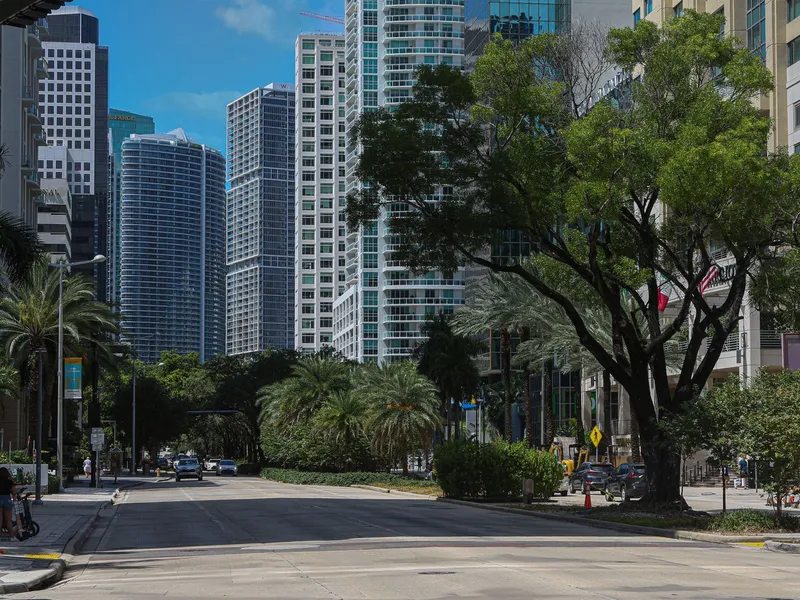
4 schools in Florida awarded sociology bachelor’s degrees in 2023–24, scored against 843 bachelor’s programs nationwide. This section shows the top 4 of 21 eligible programs at this level.
Florida’s Sociology BA sequences statistics before Methods of Social Research and places Development of Sociological Thought later in the degree, after 90 credits. Majors finish with 32 sociology credits plus a statistics course, and they must pass a department exam on basic sociological concepts. Beyond that common sequence, the catalog points to community internships, faculty projects, and independent senior-thesis work. Those options are useful to inspect separately: the course requirements are fixed, while the research or internship experience depends on the opportunity a student chooses.
Program Sources: University of Florida Catalog: Sociology BA
Florida State allows sociology majors to earn a BA or BS while keeping the same three-course disciplinary core: Sociological Theory, Methods of Social Research, and Social Statistics. The undergraduate bulletin also requires a course from a named culture and inequality group, with options such as Latinos in the United States and Race and Minority Group Relations. Students considering independent work can pursue the department’s honors-in-the-major route, which centers original research. Transfer students should notice that FSU must approve any transfer of the three required upper-division courses.
Program Sources: Florida State Undergraduate Bulletin: Sociology
Sociology (BS)
UCF’s Sociology BS puts Social Theory, Applied Social Statistics, and Research Methods in an advanced core, then reserves a large block of restricted sociology electives. Most of those electives must be upper-division courses taken in UCF’s department. The department says its undergraduates conduct their own research with a faculty mentor, giving the methods sequence a practical use. Internships and independent study are possible within the elective block but require prior departmental approval; they are options to arrange, not automatic placements attached to the major.
Program Sources: UCF: Sociology BS DegreeUCF Sociology: Undergraduate Program
Sociology Major
USF’s sociology major pairs 12 hours of required major courses with 24 hours of sociology electives. The department advises students to take Introduction to Sociology early because it precedes nearly every other sociology course. It gives transfer students a more specific sequence: those who arrive with introductory sociology and social science statistics are ready for Classical Theory and Research Methods, the foundation for later electives. A senior seminar comes later. Students can discuss concentrations, undergraduate research, and internships with an adviser rather than assuming those experiences are built into every course plan.
Program Sources: USF Sociology: Major
2 schools in Florida have a separately admitting master’s route confirmed on an official school page and reported sociology master’s degrees in 2023–24, scored against 194 master’s programs nationwide. You can apply to these master’s programs without entering a Ph.D. program. This section shows the top 2 of 2 eligible programs at this level.
USF’s Sociology MA is a thesis program with a defined distribution: core courses, sociology seminars and electives, and six thesis credits. The department requires at least 12 elective credits in graduate sociology seminars and sets limits on outside-department, independent-study, and transferred work. Admissions are for fall only, and the current application asks for a writing sample and a statement naming USF faculty relevant to the proposed research. This is a useful program to examine through adviser fit, because a thesis is part of the degree rather than an optional alternative.
Program Sources: USF Sociology: MA Program of StudyUSF Sociology: MA Admission Requirements
Florida Atlantic offers a Generalist track and a Specialist thesis track within its Sociology MA. Both begin with Social Theory and Research Methods and Design; the Generalist route fills the rest with graduate seminars, while the Specialist route reserves credits for an original empirical thesis. The department says thesis students should be ready to define their research area early. Students may also take a limited number of approved graduate credits outside sociology, so the degree can connect a sociological question to another field without making that outside coursework automatic.
Program Sources: Florida Atlantic Sociology: MA RequirementsFlorida Atlantic Sociology: MA Overview
4 schools in Florida awarded research doctorates in sociology in 2023–24. Doctoral scores leave out tuition because funding offers, not sticker price, decide the real cost. This section shows the top 4 of 5 eligible programs at this level.
Sociology PhD
Florida State organizes its sociology PhD around demography, health and aging, and social stratification. You receive training in qualitative and quantitative research and learn how to teach at the college level. The department's published sequence moves from a master's qualifying paper to an area examination, teaching, a dissertation prospectus, and the dissertation. Research discussion extends beyond classes through the inequalities and aging research groups and presentations at the Center for Demography and Population Health. Faculty connections to the Pepper Institute add another setting for work on aging and public policy.
Program Sources: Florida State Sociology PhD Overview
Sociology PhD
At the University of Florida, you develop a primary and secondary sociology specialization alongside a shared methods, theory, and professional-development core. Research strengths include environment and resources, health, aging, families, and race and ethnicity. Qualifying work covers both specializations as well as theory and methods, with written and oral components. Your supervisory committee includes a faculty member from another department. That committee helps shape the course plan and oversees a dissertation proposal and an original research dissertation.
Program Sources: University of Florida Sociology PhD Requirements
Sociology PhD
UCF's sociology PhD makes applied research part of your doctoral training. You'll choose a primary focus in crime and deviance, medical sociology, or social inequalities, then develop a secondary specialization with your adviser and committee. Methods electives include geographic information systems, program evaluation, and advanced qualitative or quantitative analysis. The degree also includes a research report and dissertation work. If you enter with a related master's, transfer credit requires approval from both the sociology graduate committee and Graduate Studies.
Program Sources: UCF Sociology PhD Requirements
Sociology PhD
Miami's sociology PhD lets you build a primary specialization in criminology, medical sociology, or race, ethnic relations, and immigration. You also complete a secondary area, which can be designed outside those fields with graduate-committee approval. The doctoral requirements include a publishable paper, a written examination in the primary area, and a dissertation with an oral defense. A teaching seminar accompanies research training. Admission is for doctoral study, with the MA earned during the earlier part of the program rather than through a separate terminal-master's route.
Program Sources: University of Miami Sociology PhD Bulletin
Each program gets the same comparison score it earns in our national sociology model, calculated against the nationwide group that meets the numeric and directory criteria. We then order Florida’s eligible programs by that score within each degree level. This page features up to 10 programs, taking the next highest-ranked program from each degree-level list in turn. Scores are compared only within the same degree level. Bachelor’s lists weigh graduation rate (20%), published tuition (20%), graduate earnings (20%), program reputation (25%), and degrees awarded (15%). Master’s lists weigh graduate tuition (25%), research activity (25%), program reputation (30%), and master’s degrees awarded (20%). Doctoral lists weigh research activity (35%), program reputation (35%), and doctoral degrees awarded (30%). Master’s lists require an official school source confirming a separately admitting master’s route. Read how state lists are built.
These picks compare only the programs featured in the lists above.
$6,368 in annual undergraduate tuition and required fees for state residents (2024–25), the lowest among the 4 bachelor’s programs shown here.
108 sociology bachelor’s degrees awarded in 2023–24, the most of any school on this list.
91% of first-time, full-time students at the school finished a bachelor’s within six years. This is a schoolwide rate, not a sociology-only rate.
$6,693 in annual graduate tuition and required fees for residents (2024–25), the lowest among the master’s programs shown here. These are schoolwide charges.
Carries the Carnegie 2025 Research 1 designation for very high research spending and doctorate production.
6 research doctorates awarded in 2023–24; ranked first of 4 doctoral programs shown here.
Awarded sociology degrees at both levels in 2023–24, so you can compare the undergraduate major and a later master’s in one department.
This comparison focuses on the 10 programs featured above.
For a master's, start with the final project. FAU's Specialist track requires original empirical research, while its Generalist track emphasizes graduate coursework. USF allocates six credits to the thesis and requires at least twelve elective credits in sociology seminars. That difference changes how early you need to define a research question and find an adviser.
Doctoral preparation also differs across these featured sociology programs in Florida. UCF connects substantive specialties with applied methods such as GIS and program evaluation. UF uses written and oral qualification and a supervisory committee that includes another department. FSU adds college teaching preparation and research groups focused on inequalities and aging. Choose the faculty and methods that fit your planned work.
These are BLS median annual wages for Florida and the United States from the May 2025 Occupational Employment and Wage Statistics survey. A median is the midpoint among workers in the occupation, from new hires to senior staff, so it is not a starting salary for a new graduate. The 10th–90th percentile range shows what the middle 80% of workers earn in the state.
| Occupation | Florida Median | Florida 10th–90th Percentile | U.S. Median | Florida Jobs |
|---|---|---|---|---|
| Sociologists | $46,950 | $39,150–$171,360 | $106,030 | 160 |
| Social Science Research Assistants | $50,700 | $33,190–$81,520 | $61,990 | 1,130 |
| Market Research Analysts and Marketing Specialists | $75,450 | $38,830–$130,570 | $78,760 | 60,770 |
Source: BLS Occupational Employment and Wage Statistics, May 2025. Wage data does not enter the program scores.
6 schools in Florida appear in the lists shown here (4 bachelor’s, 2 master’s, 4 research doctorate programs). A school can appear at more than one degree level. The page features 10 programs selected from 28 eligible programs at 21 schools. The degree counts come from federal IPEDS completions for 2023–24.
University of Central Florida lists $6,368 in annual undergraduate tuition and required fees for state residents in 2024–25, the lowest among the bachelor’s programs shown here. That is a schoolwide figure before aid, so check the program’s own costs and any fees for fieldwork or labs.
The federal IPEDS completions file records sociology research doctorates awarded in 2023–24 at University of Florida (4 degrees), Florida State University (6 degrees), University of Central Florida (7 degrees), University of Miami (4 degrees), University of South Florida (1 degree). These are historical award counts. Check current admissions, advisor availability, and funding directly with each department.
Among the featured programs, Florida Atlantic's Generalist track offers a coursework route. Its Specialist track includes a thesis. USF's sociology MA requires six thesis credits. Compare the tracks before selecting courses or approaching a potential adviser.
UCF requires an individual original research project. UF offers faculty research, community internships, and senior-thesis opportunities alongside required statistics and research methods. These are different commitments: a required project shapes every student's degree, while an optional thesis or internship needs separate planning.