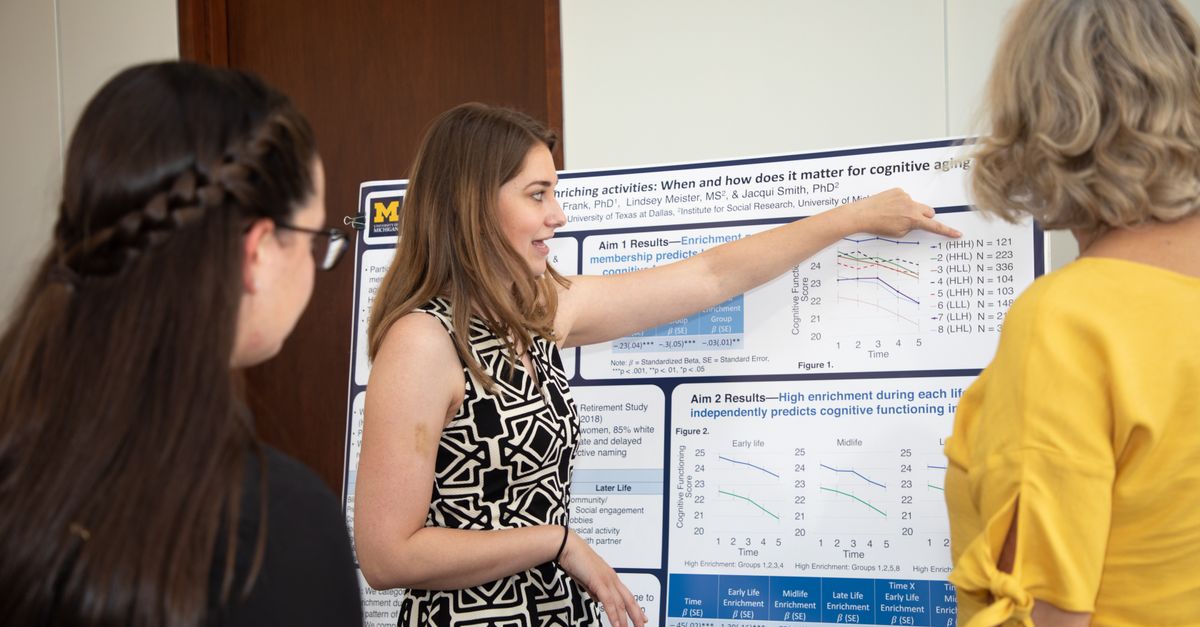
The Work Behind an Economic Forecast
The visible result may be a forecast, a policy brief, or a chart in a meeting. Before that, an economist has to decide what the figures measure, whether two periods can fairly be compared, and which assumptions drive the result. BLS describes work on employment, prices, productivity, trade, health, energy, and other subjects.
The work often moves between data and people. An economist may clean a survey, estimate a model, check an unexpected result, then explain the finding to a policy team or business leader who needs a decision rather than a statistics lesson. O*NET also lists reports, presentations, and advice to agencies and businesses among the occupation’s tasks. Writing clearly is part of the technical job: a precise result that nobody can interpret is of limited use.
Sources: BLS Occupational Outlook Handbook: Economists · O*NET OnLine: Economists
Economist Education Requirements
A master’s degree is the typical entry credential. Some government positions accept a bachelor’s degree with substantial economics and quantitative coursework; research and senior roles may require a Ph.D.
Source: BLS Occupational Outlook Handbook: Economists
Degrees to Consider
Ranked Programs for This Career
Economist Salary
The national median annual wage for economists was $124,720 in May 2025. The 10th percentile was $67,360 and the 90th percentile was $238,060.
Pay varies by location. Economist Pay by State: Kentucky, New York, and Alabama.
- 10th Percentile
- $67,360
- Median
- $124,720
- 90th Percentile
- $238,060
Source: BLS Occupational Employment and Wage Statistics, May 2025, U.S. estimates for Economists (SOC 19-3011); 17,790 employed. These figures cover workers across experience levels. They describe occupational wages, not starting offers or earnings for everyone with a particular major. How We Read the Data.
Where Economists Work
Government economists may track labor markets, prices, or the effects of regulations. A business economist may study demand or costs to inform pricing and investment. Research institutes, consulting firms, and international organizations ask different questions, but all need someone who can defend a method and explain its limits. The job is usually office-based, sometimes done independently and sometimes alongside statisticians or data scientists.
Expect long stretches of concentrated analysis and shorter periods when a report or presentation has to be finished quickly. BLS says most economists work full time, some work more than 40 hours a week, and some travel for conferences. Some days the data will not support the first explanation.
Show the Method, Not Just the Major
Graduate study is the standard route because employers need more than familiarity with economic concepts. Econometrics, statistics, calculus, and research design help you ask whether a pattern is real, which alternative explanations matter, and how uncertain an estimate is. In a portfolio or interview, a short paper built from a public dataset can show more than a list of course titles: define the question, document the data, explain the model, and say what the result cannot establish.
A bachelor’s degree can still be a valid starting point for certain government jobs. The federal Economist Series 0110 standard, for example, sets a specific basic coursework route: 21 semester hours in economics and three in statistics, accounting, or calculus, or an equivalent combination of coursework and experience. Meeting that minimum does not qualify someone for every grade or vacancy. Read the announcement’s specialized-experience requirements and check the transcript before assuming the degree title is enough.
Sources: BLS Occupational Outlook Handbook: Economists · U.S. Office of Personnel Management: Economist Series 0110
Economist or Market Research Analyst?
Both occupations use data to inform decisions, and some employers use overlapping job titles. The economist occupation is defined by economic questions and methods: policy effects, production, prices, labor markets, and broader demand. Market research analysts more often investigate consumers, competitors, and the likely sales of a particular product or service. If you want to study the effect of a tax, a labor rule, or a change in interest rates, economics is the closer fit.
Search actual duties as well as titles. An analyst vacancy may be a useful first job if it lets you build a defensible research project, but it does not automatically become economist experience. Ask whether the role includes model building, causal or policy analysis, and written interpretation. Those assignments make a stronger bridge to graduate study or an economist opening than dashboard maintenance alone.
Sources: BLS Occupational Outlook Handbook: Economists · BLS Occupational Outlook Handbook: Market Research Analysts
How to Become an Economist
Build the Quantitative Base
Take intermediate economics, calculus, statistics, and econometrics. If federal work interests you, compare your transcript with the Economist Series 0110 coursework standard while you can still choose electives.
Complete a Research Project
Use a documented dataset to answer a narrow economic question. Save the code or calculations, write a brief methods note, and be candid about uncertainty.
Choose the Right Entry Route
Review government bachelor’s-entry openings, research-assistant jobs, and master’s programs against the work you want to do. A Ph.D. is more relevant for positions built around original research or advanced specialization.
Apply to the Duties
Match each vacancy’s subject area and required methods to a project you can explain. A title alone will not tell you whether the job is economic research, business reporting, or something else.
Questions About This Career
Do You Need a Master’s Degree to Become an Economist?
Usually. BLS lists a master’s degree as the typical entry credential, while noting some primarily government positions open to applicants with a bachelor’s degree. Certain roles require a Ph.D. or relevant experience.
Can You Become an Economist With a Bachelor’s Degree?
Yes, for some openings. Federal Economist Series 0110 jobs have specific economics and quantitative coursework requirements, and each vacancy can add grade-level qualifications. Check the actual posting rather than relying on the degree name.
What Should an Economist Portfolio Include?
A concise analysis is useful when it shows the question, data source, method, result, and limits. That gives an employer something concrete to discuss beyond software names on a résumé.
Sources
Preparation advice connects these requirements to coursework and projects you can evaluate.
- BLS Occupational Outlook Handbook: Economists: Duties, work settings, degree expectations, and entry exceptions.
- O*NET OnLine: Economists: Occupation tasks and the range of research and advisory work.
- U.S. Office of Personnel Management: Economist Series 0110: Federal basic education requirement; grade-specific qualifications are separate.
- BLS Occupational Outlook Handbook: Market Research Analysts: Consumer and product-demand duties used to distinguish this adjacent occupation.