Lowest In-State Tuition for a Bachelor’s
$12,223 in annual undergraduate tuition and required fees for state residents (2024–25), the lowest among the 3 bachelor’s programs shown here.
Program Rankings
Ranked lists for every field and degree level, scored within that field and level.
All Program RankingsDegrees for Working Adults
Most Affordable Degrees
Online Degrees
Careers
What the work involves, what it pays, and the education each job usually asks for.
All Career GuidesBachelor’s Entry Routes
Graduate Study Routes
Compare Majors
Courses, research methods, and career routes, side by side before you choose a major.
Compare All MajorsHead-to-Head Comparisons
Explore a Field
Browse by State
State lists by subject and degree level, ordered by the national comparison score.
Browse All StatesPrograms by State
Anthropology programs in Arizona can start with a community-college transfer plan or move into scientific and community-based research at a university. These ten featured cards show the differences: Mesa describes student archaeology work near an Ancestral O'odham settlement, Northern Arizona requires experiential learning in its BS, and Arizona's doctorate combines a major with a separate minor. Compare the required methods, elective opportunities and final research work at the degree level you need.

By Taylor Rupe, Editor
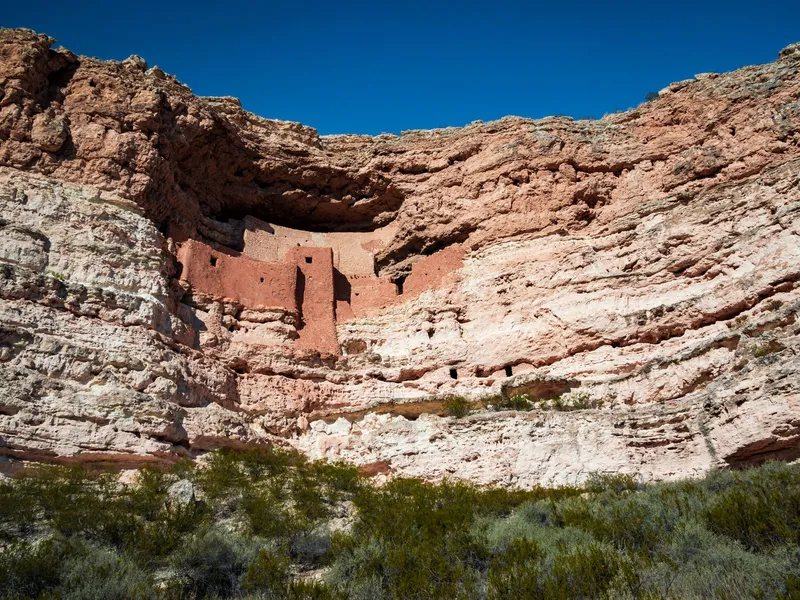
3 schools in Arizona awarded anthropology bachelor’s degrees in 2023–24, scored against 405 bachelor’s programs nationwide. This section shows the top 3 of 3 eligible programs at this level.
Anthropology BS
Arizona State's Anthropology BS trains students to formulate hypotheses, collect evidence through field surveys, excavation and measurement, and analyze findings statistically. Its scientific curriculum spans archaeology, bioarchaeology, sociocultural anthropology and evolutionary anthropology. The Tempe program's sample courses include an Anthropological Sciences Seminar alongside cultural anthropology and human evolution. Calculus is part of the preparation: the first required mathematics course is Brief Calculus or an approved calculus alternative. That combination makes quantitative preparation an important consideration when choosing this bachelor's route.
Program Sources: Anthropology Degree, BS | ASU
Anthropology BA
The University of Arizona's Anthropology BA requires foundations in cultural anthropology, archaeology, human evolution and language. Its writing requirement is specific: majors must earn an A or B in an upper-division anthropology Writing Emphasis course. Students also complete a minor or a second major; with approval, a thematic minor can connect a shared topic across departments. Senior thesis and internship credits are optional ways to shape upper-division study. This structure leaves room to connect anthropological questions with another field while keeping research writing within the major.
Program Sources: B.A./B.S. Degree Requirements | School of Anthropology
Anthropology BS
Northern Arizona's Anthropology BS combines a required methods course with an experiential-learning requirement. The curriculum emphasizes interviewing, focus groups, data analysis, and field and laboratory methods, while asking students to examine research ethics and their own cultural assumptions. Community engagement includes Indigenous perspectives and collaboration with organizations. Students choose among approved experiential formats; fieldwork, internships, research and study abroad are options rather than separate requirements for every student. The Flagstaff degree therefore calls for applied practice while allowing the experience to fit a student's developing interests.
Program Sources: Anthropology, Bachelor of Science | 2026-2027 Academic Catalog | Northern Arizona University
1 school in Arizona has a separately admitting master’s route confirmed on an official school page and reported anthropology master’s degrees in 2023–24, scored against 144 master’s programs nationwide. You can apply to these master’s programs without entering a Ph.D. program. This section shows the top 1 of 1 eligible programs at this level.
Northern Arizona's Anthropology MA offers Archaeology and Sociocultural concentrations built around a defended thesis. Both include theory, ethics, research methods, pre-thesis preparation and a writing seminar. Archaeology students study material culture and biological remains alongside heritage-management regulations and ethical dilemmas; their admission preparation includes a field school. The department's typical sequence places methods and project planning in the first year, research during the intervening summer, and thesis writing and defense in the second.
Program Sources: Anthropology - Master of Arts | AnthropologyNAU Master of Arts degrees in Anthropology | Anthropology
2 schools in Arizona awarded research doctorates in anthropology in 2023–24. Doctoral scores leave out tuition because funding offers, not sticker price, decide the real cost. This section shows the top 2 of 2 eligible programs at this level.
Arizona's Anthropology PhD combines a major field with a required doctoral minor. Students may choose another anthropological subfield, another department, or a synthetic minor such as Medical Anthropology or Southwest Land, Culture and Society. The school works across archaeology, biological, linguistic, and sociocultural anthropology, with stated strengths in community-based research and cultural heritage in the Southwest. Doctoral requirements also include language, statistics, written and oral comprehensive exams, and dissertation credits. The major-plus-minor design gives a clear way to integrate a second method or regional focus into a research plan.
Program Sources: University of Arizona Anthropology PhD
PhD in Anthropology
Arizona State's Anthropology PhD is housed in the School of Human Evolution and Social Change. Its research fields include archaeology, bioarchaeology, evolutionary anthropology, and sociocultural anthropology, with coursework drawing on methods such as data analysis and research design. The degree requires 84 credit hours, a written comprehensive exam, a prospectus, and a dissertation. Students entering without a master's degree complete an additional graduate-credit stage and present a research portfolio; a relevant master's may count for up to 30 credits. Those distinct entry routes make prior preparation especially consequential here.
Program Sources: ASU Anthropology PhD
4 colleges in Arizona awarded anthropology associate degrees in 2023–24. Ask how the courses transfer before you plan a bachelor’s degree. This section shows the top 4 of 7 eligible programs at this level.
Anthropology AA
Mesa's Anthropology AA combines cultural anthropology, human evolution and a choice of Old World or New World archaeology. Students interested in excavation can consider Archaeological Field Methods as an elective. Faculty member Kirk Costion describes involving MCC students in local research on domestic refuse and ritual debris near the Ancestral O'odham settlement Sce:dagĭ Mu:val Va'aki. His teaching includes practical archaeological fieldwork. The associate pathway also recommends service learning and special projects, giving students several possible ways to investigate a question before transferring.
Program Sources: Anthropology | Programs and Degrees | Mesa Community CollegeKirk Costion, Ph.D. | Contacts | Mesa Community CollegeModification 8109 Associate in Arts, Emphasis in Anthropology Fall 2026
Anthropology AA
Chandler-Gilbert's Anthropology AA introduces biological evidence through Bones, Stones, and Human Evolution, a lecture-and-laboratory course covering fossil humans, primate anatomy, genetics and environmental influences on human biology. Students can extend that work with the recommended Forensic Anthropology elective. Its laboratory activities explore how skeletal analysis informs identification and investigations, including human-rights cases and mass disasters. Cultural anthropology and an Old World or New World archaeology choice complete the subject's required foundation. Elective choices should follow the intended university major because the associate plan serves several bachelor's pathways.
Program Sources: Associate in Arts, Emphasis in Anthropology | Chandler Gilbert Community CollegeAnthropology (Science/Math) (ASM) | Chandler Gilbert Community College
Anthropology AA
Glendale's Anthropology AA uses cultural comparison and the study of material remains to introduce different ways of investigating human life. Its required foundation pairs cultural anthropology with Bones, Stones, and Human Evolution, then lets students choose archaeology focused on the Old World or the Americas. The college describes cross-cultural analysis as a way to examine both other societies and one's own assumptions. Its anthropology credits transfer to Arizona's three state universities, while the AA plan advises choosing electives around the specific receiving degree, including any world-language preparation it requires.
Program Sources: Associate in Arts, Emphasis in Anthropology | Glendale Community CollegeAnthropology | Glendale Community College
Anthropology AA
Estrella Mountain's Anthropology AA places cultural anthropology and human evolution before a choice between Old World and New World archaeology in its suggested sequence. The elective menu lets students develop a regional or topical focus through Southwest Archaeology, Indians of the Southwest, Global Health, or Death and Dying Across Cultures. These are recommended choices, not a required concentration. Service learning and special projects also appear among the options. Students should map those electives to their transfer destination and check where courses will run, since the college notes that study across Maricopa campuses may be necessary.
Program Sources: Associate in Arts, Emphasis in Anthropology | Estrella Mountain Community College
Each program gets the same comparison score it earns in our national anthropology model, calculated against the nationwide group that meets the numeric and directory criteria. We then order Arizona’s eligible programs by that score within each degree level. This page features up to 10 programs, taking the next highest-ranked program from each degree-level list in turn. Scores are compared only within the same degree level. Bachelor’s lists weigh graduation rate (20%), published tuition (20%), graduate earnings (20%), program reputation (25%), and degrees awarded (15%). Master’s lists weigh graduate tuition (25%), research activity (25%), program reputation (30%), and master’s degrees awarded (20%). Doctoral lists weigh research activity (35%), program reputation (35%), and doctoral degrees awarded (30%). Associate lists weigh graduation rate (30%), published tuition (25%), program reputation (25%), and degrees awarded (20%). Master’s lists require an official school source confirming a separately admitting master’s route. See the full ranking method.
These picks compare only the programs featured in the lists above.
$12,223 in annual undergraduate tuition and required fees for state residents (2024–25), the lowest among the 3 bachelor’s programs shown here.
73 anthropology bachelor’s degrees awarded in 2023–24, the most of any school on this list.
Carries the Carnegie 2025 Research 1 designation for very high research spending and doctorate production.
10 research doctorates awarded in 2023–24; ranked first of 2 doctoral programs shown here.
Awarded anthropology degrees at both levels in 2023–24, so you can compare the undergraduate major and a later master’s in one department.
$2,358 in annual in-state tuition and required fees (2024–25). Confirm how credits transfer before you enroll.
This comparison focuses on the 10 programs featured above.
The featured associate degrees share Maricopa's anthropology foundation, but the details help with planning. Mesa documents local archaeological research involving students. Chandler-Gilbert's course catalog describes forensic laboratory work, while Estrella Mountain lists regional electives in Southwest archaeology and Indigenous peoples. Glendale emphasizes cross-cultural analysis and transfer of anthropology credits to Arizona's state universities. Elective availability and the receiving degree still matter when choosing a campus.
The bachelor's routes ask students to develop different forms of evidence. ASU's BS includes calculus preparation and statistical analysis of anthropological data. Northern Arizona pairs methods with experiential learning, with several possible formats. The University of Arizona BA requires strong performance in an anthropology writing course and a minor or second major. Read those requirements alongside your interests in scientific analysis, community engagement or a complementary discipline.
Graduate study introduces another choice of research structure. Northern Arizona's MA connects theory and methods to a defended thesis in Archaeology or Sociocultural Anthropology. The University of Arizona PhD requires a doctoral minor and comprehensive examinations. ASU's doctorate uses a research portfolio and public presentation for students entering without a master's degree before they continue to its later stage. These are requirements of the featured programs, not a single statewide graduate pathway.
These are BLS median annual wages for Arizona and the United States from the May 2025 Occupational Employment and Wage Statistics survey. A median is the midpoint among workers in the occupation, from new hires to senior staff, so it is not a starting salary for a new graduate. The 10th–90th percentile range shows what the middle 80% of workers earn in the state.
| Occupation | Arizona Median | Arizona 10th–90th Percentile | U.S. Median | Arizona Jobs |
|---|---|---|---|---|
| Anthropologists and Archeologists | $65,290 | $49,500–$105,060 | $70,770 | 500 |
| Social Science Research Assistants | $61,680 | $47,130–$82,470 | $61,990 | 1,020 |
Source: BLS Occupational Employment and Wage Statistics, May 2025. Wage data does not enter the program scores.
7 schools in Arizona appear in the lists shown here (3 bachelor’s, 1 master’s, 2 research doctorate, 4 associate programs). A school can appear at more than one degree level. The page features 10 programs selected from 13 eligible programs at 10 schools. The degree counts come from federal IPEDS completions for 2023–24.
Arizona State University lists $12,223 in annual undergraduate tuition and required fees for state residents in 2024–25, the lowest among the bachelor’s programs shown here. That is a schoolwide figure before aid, so check the program’s own costs and any fees for fieldwork or labs.
The federal IPEDS completions file records anthropology research doctorates awarded in 2023–24 at University of Arizona (10 degrees), Arizona State University (7 degrees). These are historical award counts. Check current admissions, advisor availability, and funding directly with each department.
Start with the bachelor's degree you intend to enter. The featured Maricopa AA plans include cultural anthropology, human evolution and an archaeology choice, then use electives to align with transfer requirements. Glendale states that its anthropology credits transfer to Arizona's three state universities. The plans also warn that courses may require attendance at more than one Maricopa college, so confirm the intended sequence and campus availability with an advisor.
Requirements depend on the award. Northern Arizona's BS requires experiential learning, but fieldwork and internships are possible formats rather than universal requirements. Its MA specifies research, writing and defense of a thesis. Mesa lists Archaeological Field Methods among recommended AA electives. A fieldwork opportunity should therefore be checked separately from a degree's required culminating work.