Key Points
- UTC's October 29, 2026 symposium adds a College AI Certificate panel.
- Faculty showcase maps AI work across criminology, political science, communication, archaeology, psychology.
- A 2026 preprint reports 76% human agreement, Cohen's kappa 0.72.
Introduction: Why Campus Symposiums Are Signals of the Field's Next Transition
UTC's College of Arts and Sciences scheduled an AI Symposium on Research and Teaching Across the Humanities and Social Sciences for October 29, 2026. Its panels pair a proposed AI certificate with faculty research and a session on building externally funded AI teams.
That agenda captures a tension: integration of AI into curricula and funded research is arriving faster than shared norms for validity, ethics, and assessment. The lineup doubles as an early map of research fronts and credential shifts that departments and junior faculty will need to read.
The 2026 UTC Symposium as a Case Study in Institutional Integration
How does a single college move from scattered AI experiments to a coordinated research and teaching agenda? The University of Tennessee at Chattanooga's College of Arts and Sciences offers a concrete answer on October 29, 2026, from 9:00 a.m. to 2:30 p.m. in University Center Conference Room 315. The event is open to faculty, staff, and students; Dean Pam Riggs-Gelasco gives the opening remarks.
Three Panels, One Integration Strategy
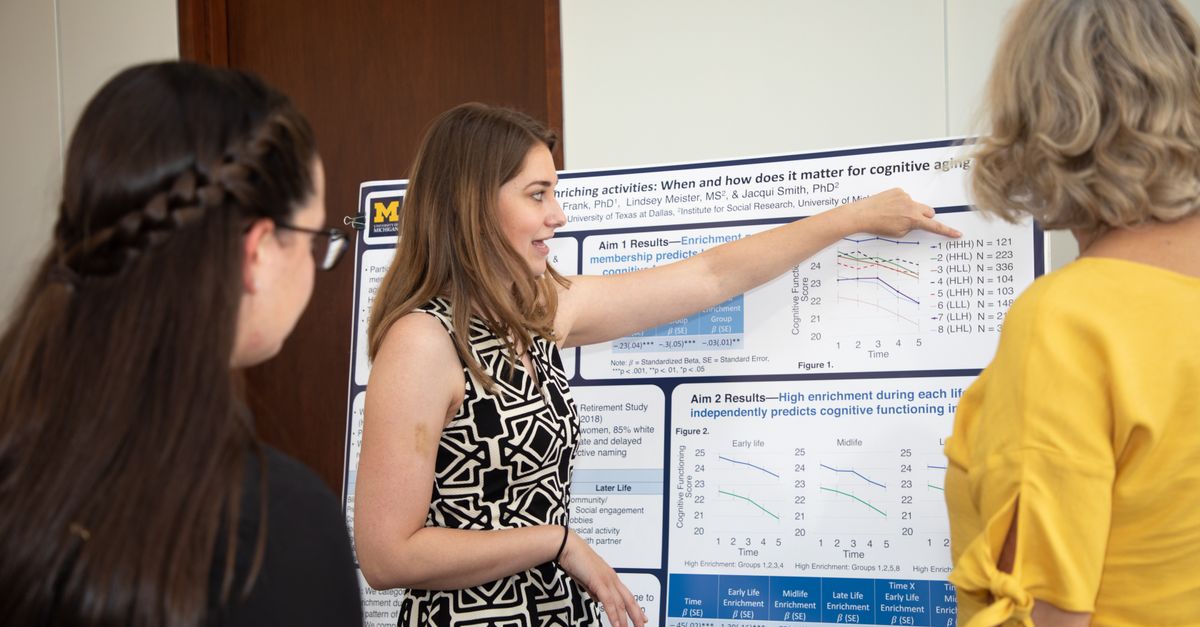
The symposium starts with a 9:30 a.m. panel on a new AI Certificate, moderated by Lucy Schultz with Ahmet Kule and Feng Guo. A faculty research showcase follows from 10:10 to 11:45 a.m., moderated by Chandra Ward and presenting Zackary Simoni, Andrew J. Van Slyke, Marcus D. Mauldin, and Nagwan R. Zahry. The afternoon lightning talks, moderated by Zahry, feature Chris Vidmar, Rowan Johnson, Brandon Bouchillon, and Jeremy Strickler.
Funding as the Missing Layer
What distinguishes this event is its explicit link between disciplinary AI research and external funding. Guest speaker Hunter Heyck, PhD, Director of the Center for Creativity and Authenticity in AI Cultural Production at the University of Oklahoma, leads a virtual session from 12:30 to 1:30 p.m. on building collaborative teams for AI research and external funding. The pairing signals that institutions are treating AI not only as a method but as a grant-ready research front.
The full schedule and registration details appear in the official UTC Campus Updates announcement.
Model Performance and Replication: What the Benchmarks Actually Show
Benchmarks for AI-assisted social science have moved from capability demos to mixed, task-dependent validity evidence. The numbers do not support a single verdict: results shift with the task, model version, population, and prompt design.
Where Human-Level Coding Holds Up
An 11-country study of political social media annotation found GPT-4 coded with 0.934 accuracy and 0.982 inter-coder reliability, higher than supervised models and human coders in that constrained inference task. In a teacher-education pilot, human-LLM reliability was not systematically lower than human-human reliability for many variables.1
Where Agreement Weakens
Broader qualitative coding is less consistent. A Discord study reported moderate agreement only: Cohen's kappa 0.57 and Fleiss kappa 0.46 for GPT-4 versus humans. A 2024 analysis found open coding promising but axial coding difficult, with bias and inaccuracy unresolved.3 Most 2026 measurement reviews note that high agreement mainly shows convergence with a chosen human procedure, not independent construct validity.
Synthetic Participants Remain Unstable
In a three-nation 2025 comparison across 43 survey questions, GPT-4 responses were more positive, more progressive, and more financially literate than human respondents, with medium effect-size differences. Intervention effects that were significant for humans were often nonsignificant for synthetic participants and vice versa. A review of 63 persona studies found tasks and target populations frequently underspecified.
For research teams, the practical implication is not to avoid AI coding or synthetic samples, but to pre-register the model, prompt, temperature, and codebook, and to replicate results on human data wherever the claim is substantive.
- Pilot Study Categorizing Master's Theses in Teacher Education, Taylor & Francis
- Review of 63 Peer-Reviewed Persona Studies, ERIC
- ChatGPT for Qualitative Analysis, SAGE Publications
In a 2026 arXiv preprint, "Comparing human vs. machine-assisted analysis to develop a qualitative coding framework," AI-assisted classification reached 76% agreement with a human-coded reference standard, Cohen's kappa 0.72. Human analysts establishing that standard reached 0.82.
IRB, Ethics, and Synthetic Participants: The Unanswered Governance Questions
OHRP’s September 19, 2024 workshop on AI oversight1 and NIH’s reliance on 45 CFR 46 point to the same conclusion: there is no categorical rule that LLM-generated data or synthetic participants are human subjects research. The federal test remains whether a project involves interaction or intervention with living people or identifiable private information.2
When Synthetic Data Still Raises Review Questions
An absence of an AI-specific category does not mean exemption. Nature reported in 2025 that some universities waived ethical review when synthetic data replaced human data, even as reidentification risks remained unresolved.3 Synthetic records can reproduce or infer information about real people through memorization, so privacy review should cover direct disclosure, inference, and memorization.2 Sensitive human-subject data should not be placed in public or consumer LLM services unless an IRB, privacy and security review, data-use agreement, and applicable law authorize it.
Documentation Reviewers Increasingly Expect
For research that uses synthetic participants or LLM outputs, documentation is becoming a de facto ethics requirement. Researchers should record prompts, model versions, temperature settings, failure logs, and how synthetic records were used: fully synthetic, transformed, augmented, imputed, simulated, or mixed. 2025 synthetic data guidance recommends disclosing how and why synthetic data were used, labeling which portions are synthetic, and sharing data, algorithms, and code.4 If privacy, licensing, security, or provider terms bar release, document the restriction and provide reproducible substitutes.
The Local Gap Remains Open
The UTC symposium signals that faculty and administrators are asking these questions, but it does not resolve them. Georgia Institute of Technology's October 14, 2025 draft guidance lists six AI principles5, while SACHRP has issued two AI-related IRB recommendations6. Neither establishes a binding federal rule for synthetic participants, so researchers should seek a determination rather than assume exemption.
- OHRP Past Events, U.S. Department of Health and Human Services (OHRP)
- NIH Policy on Artificial Intelligence, National Institutes of Health Office of Science Policy
- Universities waive ethics review for synthetic data, Nature
- Synthetic Data Reproducibility and Reporting Guidance, PubMed Central
- AI Guidance (Draft), Georgia Institute of Technology
- SACHRP Recommendations, U.S. Department of Health and Human Services (OHRP)
The UTC symposium's research showcase, lightning talks, and AI certificate panel are less a local agenda than a preview of the research fronts and curricular shifts that will define social science's next transition.